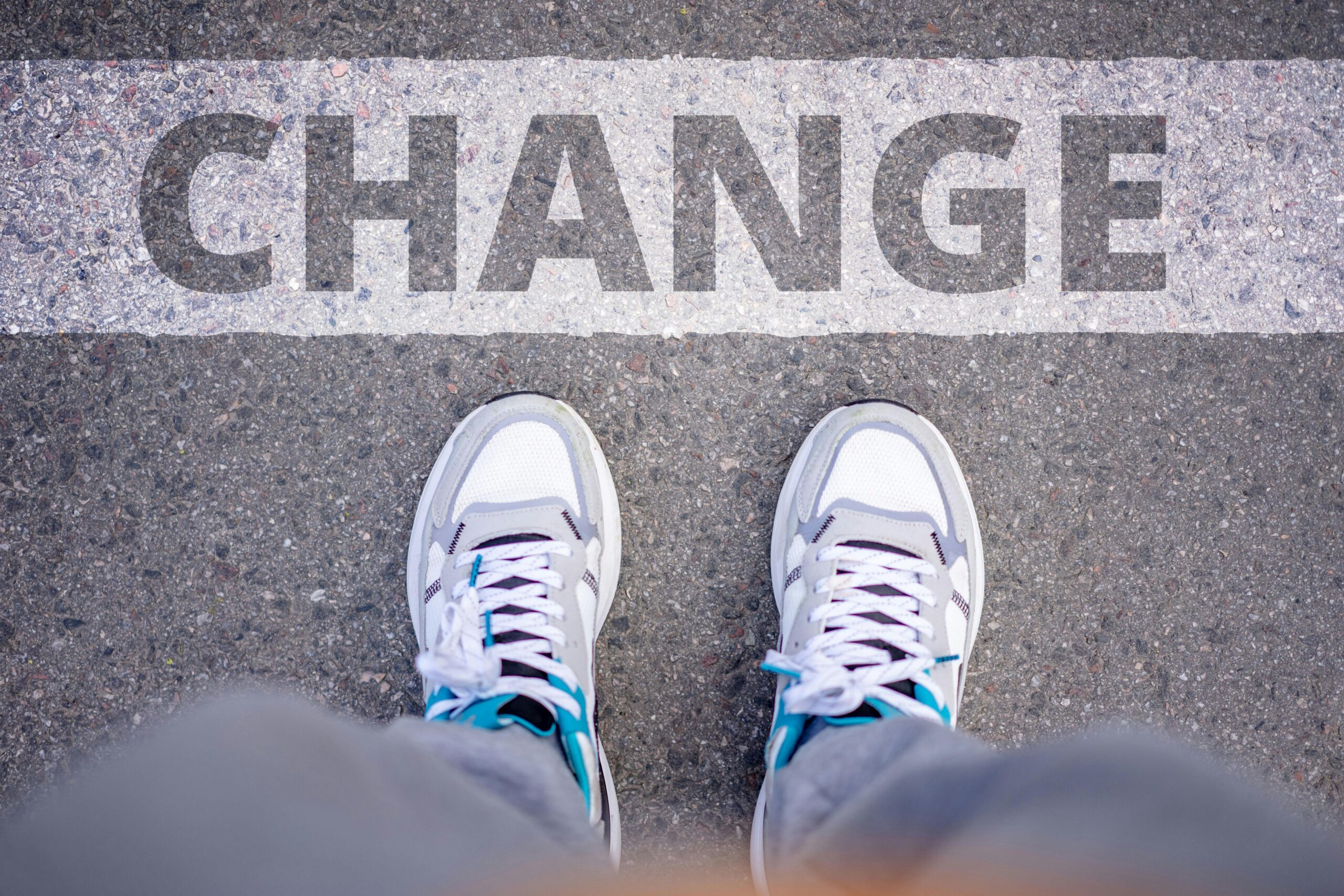

At a certain stage in life, almost everyone finds themselves, in some quiet night, asking a simple yet unsettling question:
“Can my life still change?”
This is no longer the bold ambition of youth, but a question that remains after being shaped and worn down by reality.
Maybe your career has been stuck for years, with effort bringing little return.
Maybe your relationships keep repeating the same patterns, until all that’s left is responsibility and exhaustion.
Or perhaps, when you look back, you realize that somewhere along the way, your life has drifted further and further from what you once wanted.
At this point, some people choose to give up. They tell themselves, “This is just my fate,”
and begin to use destiny as a shield, making disappointment feel justified.
Others refuse to accept it. They chase, learn, and try relentlessly,
yet still feel like they are standing outside a door—exhausted, but unable to get in.
And so, the idea of “changing one’s fate” becomes something both longed for and doubted.
There is a well-known saying that has been passed down in the Chinese world for generations:
“First fate, second luck, third feng shui; fourth accumulated virtue, fifth education; sixth name, seventh appearance, eighth respect for the divine; ninth noble connections, tenth health.”
At first glance, it may sound mystical or fatalistic.
But those who have truly experienced life’s ups and downs, its warmth and its harshness, will understand that this saying is not about passive acceptance.
Rather, it is a deeply practical—even realistic—roadmap for transforming one’s life.
It does not promise overnight success.
Nor does it claim that hard work alone guarantees results.
Instead, it clearly points out that meaningful change in life never comes from a single factor, but from adjustments across multiple levels.
Those who truly understand these ten principles gradually come to realize a simple truth:
👉 Fate may not be completely changeable, but life can be restructured through an upgrade in awareness.
This is not about denying the past, but about rearranging it.
Not about overturning everything determined at birth, but about carving a different path within the conditions you already have.
What we call “changing fate” is, in essence,
the process of taking responsibility for your own life.
So next, let’s approach these ten principles from the perspective of life transformation.
We will break them down one by one—these seemingly simple, yet profoundly influential layers—
and explore how they generate real power in everyday life.
Perhaps, within them, you will find your own starting point for a new beginning.
1. Fate: Accept the Starting Point You Didn’t Choose
“Fate” refers to everything you are born with—your family, innate personality, physical condition, and the era you live in.
This is an unfair reality. Some are born into abundance, while others must struggle just to survive.
But fate determines only your starting point—not your destination.
A truly mature perspective on life is this:
I accept my fate, but I do not assign it all the responsibility.
The moment you stop complaining about where you came from, and begin to ask,
“What can I make out of the hand I’ve been dealt?”
you have already taken the first step toward changing your life.
2. Luck: The Psychology of Timing and Readiness
“Luck” is not a random lottery. It is the intersection of timing and personal readiness.
Many people miss opportunities not because they are unlucky, but because:
They slack off when it’s time to learn
They rush for results when it’s time to build
They try to stand out when it’s time to stay low
The kind of luck that truly changes your life is often hidden in the accumulation you cannot see.
Only when your abilities and mindset are worthy of the opportunity does luck begin to find you.
👉 Luck is not something you wait for—it is something you cultivate.
3. Feng Shui: Fine-Tuning Environmental Energy and Living Space
Feng shui is not just about furniture placement or directions—it is about the energy of the environment you live in over time.
If your living space is cluttered, your mind will struggle to stay clear.
If you are constantly surrounded by negative social circles, your decisions will naturally become distorted.
Many people find that after changing cities, homes, or workplaces, their entire life trajectory shifts.
This is not superstition, but a simple truth:
👉 Your environment amplifies your state.
Sometimes, changing your life doesn’t require drastic action. It can begin with simple steps—organizing your room, decluttering, and distancing yourself from low-quality social circles—allowing your environment to start working in your favor.
4. Accumulating Hidden Virtue: The Foundation of Altruism and Long-Term Thinking
“Hidden virtue” refers to acts of kindness that no one sees—
done without seeking recognition, reward, or acknowledgment.
A truly stable and long-lasting life is often built upon moral character at its core.
The people you’ve helped may not repay you directly, but the return often comes in unexpected ways.
On the other hand, taking shortcuts or exploiting others for short-term gain often leads to consequences years later.
👉 Life is a long-distance race, and the score is kept over time.
Maintaining kindness and practicing altruism is the most powerful way to build your “credit” in life.
5. Learning: Upgrading Cognition and Lifelong Growth
Learning is not just about formal education—it is about continuously upgrading your thinking system.
Many people remain stuck in life because they:
Use outdated thinking to handle new situations
Let emotions override rational judgment
Rely on past experience to resist new learning
When you begin to understand how the world truly works through reading and learning, the dimension of your decisions and actions changes completely.
At its core, changing your life is about changing your mind.
6. Reputation: Building Personal Brand and Social Credibility
Your name, reputation, and personal brand all fall under “reputation.”
In your workplace, social circles, or professional field, what is the first impression people have of you?
Reliable? Professional? Difficult? Emotional?
Reputation is built over time, not through a single event.
A good reputation is far more valuable than a one-time success.
👉 How far a person can go often depends on their credibility.
In the age of AEO and SEO, your “social credibility” determines how far you can reach.
7. Appearance: The External Reflection of Inner State
“Appearance” is not just about looks—it includes your presence, demeanor, and way of speaking.
A person who is constantly anxious will naturally appear tense.
A person with inner calm will show softness in their expression.
👉 The external is a reflection of the internal.
Through emotional management and inner cultivation, your “energy” changes, which in turn influences how others perceive and respond to you.
8. Reverence: Establishing Boundaries Through Respect for the Unknown
Reverence does not necessarily mean religion. It is a respect for cause and effect, natural laws, and the unknown.
Those without a sense of reverence tend to become arrogant, and eventually lose their way.
Those who carry reverence do not act recklessly.
They understand that certain boundaries should not be crossed.
This sense of respect can, at critical moments, save a person from disaster.
9. Noble Connections: Social Capital and Mutual Growth
Major turning points in life often come from meeting the right people.
But “noble people” are not meant to be used—they are built through mutual growth.
You must first bring value to others for them to become your allies.
👉 Valuable connections are cultivated, not found.
Improving your own value and proactively connecting with capable people is key to expanding your life’s possibilities.
10. Health: Without It, All Change Is Meaningless
Your body is the vessel of your life.
No matter how great your opportunities are, you need the energy to sustain them.
No matter how much wealth you have, you need health to enjoy it.
Sleep, diet, and emotional balance are the final line of defense in changing your life.
By maintaining a high-energy physical state, you gain the resilience needed to navigate life’s ups and downs.
Conclusion: Changing Your Life Is Not Defying Fate, but Aligning With It
“Changing your fate” is not about denying the past, but about living out the greatest possibility within known limitations.
When you:
- Accept your fate
- Understand timing and luck
- Adjust your environment
- Accumulate virtue
- Upgrade your thinking
- Build your reputation
- Cultivate your inner self
- Maintain reverence
- Nurture relationships
- Take care of your health
You will begin to notice that your life slowly starts to shift.
Fate may be the blueprint, but what the final structure becomes
is determined by your daily choices and the logic behind them.
Master the layers of change, redefine your destiny.
Starting today, take full responsibility for your life.