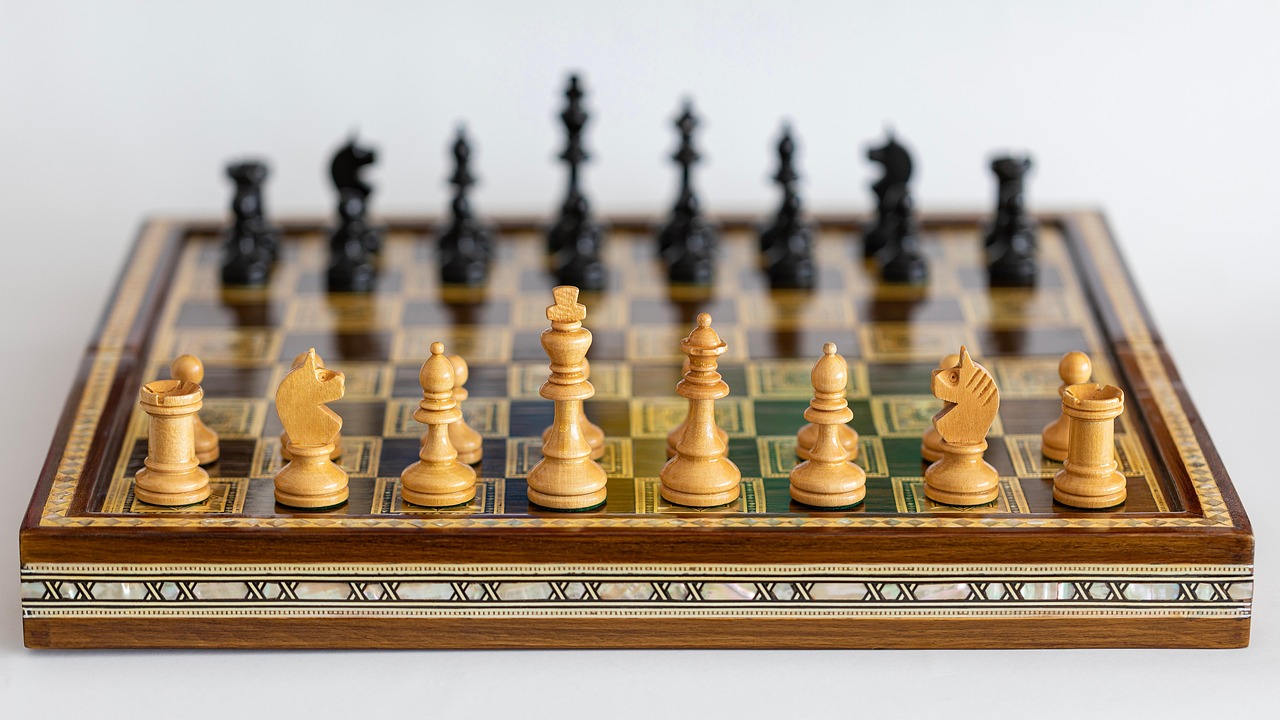

When The Art of War is mentioned, many people still associate it primarily with battlefield tactics. Yet the deeper one reads, the clearer its true core becomes:
how to achieve the greatest advantage at the lowest possible cost.
Chapter 3, Strategic Offensive, reveals one of Sun Tzu’s most famous insights:
“To subdue the enemy without fighting is the acme of skill.”
Today, the battles we face are no longer military wars. They have evolved into workplace competition, business strategy, human relationships, and life choices. Compared to direct confrontation, what we need far more is the ability to achieve maximum results with minimal cost.
In this article, we’ll explore The Art of War – Chapter 3 and translate its wisdom into strategic thinking applicable to modern life.
The Art of War – Chapter 3 (Original Text)
Sun Tzu said:
In the conduct of war, to preserve the state intact is best; to destroy it is inferior.
To preserve an army intact is best; to destroy it is inferior.
To preserve a brigade intact is best; to destroy it is inferior.
To preserve a battalion intact is best; to destroy it is inferior.
To preserve a company intact is best; to destroy it is inferior.Therefore, to win a hundred battles is not the highest excellence;
to subdue the enemy without fighting is the highest excellence.
Thus, the best strategy is to attack the enemy’s plans;
next is to disrupt alliances;
next is to attack the army;
the worst is to attack walled cities.Attacking cities is only done as a last resort.
Preparing siege equipment takes months,
and constructing assault ramps takes months more.When a general, unable to restrain his anger, launches an assault,
soldiers swarm like ants,
one-third are killed,
and yet the city is not taken.
This is the calamity of siege warfare.
Therefore, those skilled in warfare subdue the enemy’s forces without battle,
capture cities without attack,
and overthrow states without prolonged warfare.
They contend for victory while preserving what is whole.
Thus, their forces are not worn down, and their gains are complete.
This is the method of strategic offense.
As a rule of war:
when ten to one, surround the enemy;
when five to one, attack;
when double, divide the enemy;
when equal, engage;
when fewer, defend;
when inferior, avoid battle.A small but stubborn force becomes the captive of a larger one.
The general is the pillar of the state.
When the pillar is strong, the state is strong;
when it is flawed, the state is weak.
There are three ways a ruler brings misfortune upon the army:
ordering advance when it should not advance,
ordering retreat when it should not retreat—this shackles the army;
interfering in military affairs without understanding them—this confuses the soldiers;
assigning commands without understanding authority—this creates doubt.When an army is confused and doubtful, disaster is inevitable.
There are five factors for victory:
knowing when to fight and when not to fight;
understanding how to handle both large and small forces;
unity of purpose between leadership and ranks;
preparedness against the unprepared;
capable generals unhindered by rulers.These five are the way to victory.
Thus it is said:
Know the enemy and know yourself, and you will not be imperiled in a hundred battles.
Know yourself but not the enemy, and you will win one and lose one.
Know neither yourself nor the enemy, and you will be imperiled in every battle.
1. Total Victory: The Highest Win Is Not Having to Fight
Sun Tzu begins with a powerful principle:
“To preserve the state intact is best; to destroy it is inferior.”
True victory is not about damage, sacrifice, or depletion—it is about winning without loss.
Modern parallels:
- A successful business negotiation is not crushing the other side, but creating mutual benefit.
- Winning in a relationship is not forcing an apology, but finding a path where conflict is unnecessary.
- Workplace competition is not eliminating others, but avoiding meaningless conflict or creating cooperation.
We often assume that defeating others equals success.
Sun Tzu reminds us:
Winning every battle may look impressive, but every battle consumes resources.
The true master does not need to fight.
2. “Attack Strategy First”: Insight Is Greater Than Force
“The best strategy is to attack the enemy’s plans” is the core of this chapter.
In modern terms:
You are not fighting your opponent—you are dismantling their strategy.
You are not resisting strength—you are understanding intent.
When you render a plan unworkable, conflict becomes unnecessary.
Examples:
- In business, don’t fixate on competitors’ products—understand the market they are targeting.
- In conflict, don’t rush to counterattack—identify the underlying need.
- In self-management, don’t battle procrastination—redesign your environment and workflow.
Victory comes from strategy, not brute force.
3. Disrupt Alliances: Change the Network, Not the Person
“Attacking alliances” refers to diplomacy, partnerships, and support systems.
In modern life:
Smart strategy focuses on improving relationships rather than confronting individuals.
- In business, partnerships often break monopolies more effectively than solo efforts.
- In the workplace, trust outperforms direct confrontation.
- In life, solving problems is often about strengthening your support structure.
The stronger your network, the lower your cost.
4. The Worst Strategy: Forcing Outcomes Is Always Expensive
Sun Tzu describes siege warfare in grim detail:
- Months to build equipment
- Months to construct assault ramps
- Heavy casualties
- No guarantee of success
The message is unmistakable:
Any goal that requires force is rarely the best strategy.
Modern “sieges” include:
- Entering overcrowded markets
- Negotiating with threats
- Using emotional pressure in relationships
- Overworking to compensate for poor planning
You may win—but the cost may be everything else.
5. The Five Factors of Victory: Preparation Beats Combat
Sun Tzu lists five conditions for victory:
1️⃣ Knowing when not to fight
2️⃣ Using resources wisely
3️⃣ Unity of purpose
4️⃣ Preparedness against uncertainty
5️⃣ Trusting capable leadership
In modern terms, these are:
- The principles of successful projects
- The foundations of strong teams
- The skills of a resilient life
Victory is decided before conflict begins.
6. Know Yourself and the Enemy: A Guide to Avoiding Battle
“Know yourself and know the enemy” is often misunderstood as a promise of victory.
What Sun Tzu truly teaches is this:
When you truly understand both sides,
you won’t need to fight those hundred battles at all.
Avoiding unnecessary conflict preserves strength.
True power lies not in how many battles you win, but how many you never have to fight.
Conclusion: Strategic Offensive Is the Art of Reducing Life’s Cost
If the first chapter teaches us to think before acting,
Strategic Offensive teaches us:
Even when conflict is unavoidable, win at the lowest possible cost.
The higher your strategy, the less you need to fight.
The deeper your insight, the less you need to prove.
The earlier your preparation, the less you need to force outcomes.
The greatest victories often occur before the battle begins.